
TDI–PTMEG elastomer prepolymer
Drodur 135
- NCO content
- 3.2 - 3.8%; ISO 11909
- Viscosity @ 25°C (Brookfield)
- 40000 - 60000cP; ASTM D 2196
- Monomeric content
- < 0.5%; ISO 10283
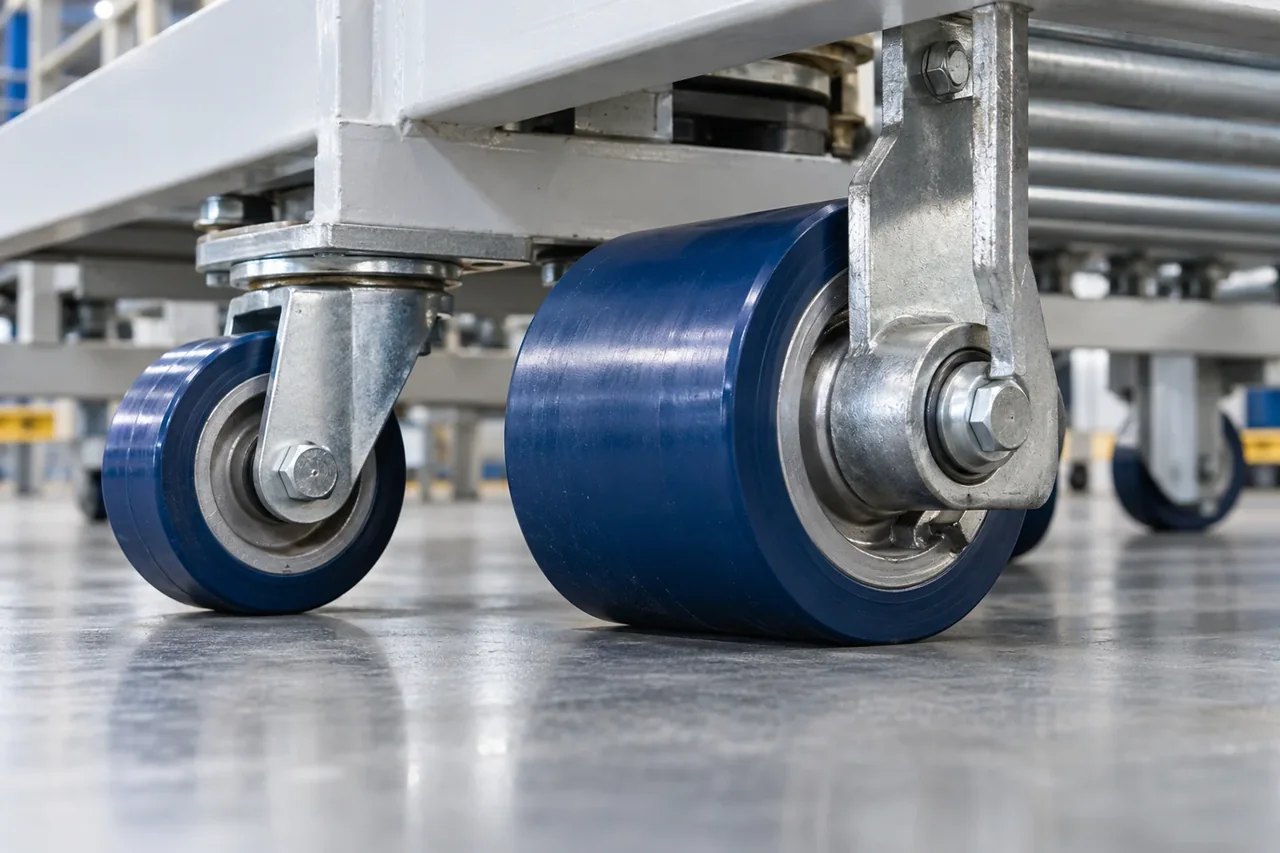
Prepolymers and chain extenders for rollers, wheels, linings and cast parts.
Explore the documented candidates and the properties relevant to their role.
5 documented candidates across 2 roles
View all matching gradesExamples show different formulation roles. Choose a role to explore alternatives for that job.
Begin with the prepolymer route, then confirm the curative and processing window. The examples do not prescribe a prepolymer–curative combination.
Drodur 135 lists these end uses. Review its TDI–PTMEG chemistry, NCO content and viscosity with the curative and casting equipment intended for the part.
TDI–PTMEG ether prepolymer containing 3.5% NCO.
Drodur 143 and 163 have different published NCO contents and viscosities. Compare them with the same application brief; NCO content alone does not specify finished-part hardness.
TDI–PTMEG ether prepolymer containing 4.3% NCO.
TDI–PTMEG ether prepolymer containing 6.3% NCO.
These grades have curing or chain-extender roles. Confirm their compatibility, equivalent-weight basis and reaction time with the selected system rather than treating them as alternatives to a prepolymer.
Curing agent for epoxy resins and polyurethanes, and chain extender for polyurea elastomers.
Chain extender for polyurea elastomers.
For cast polyurethane development, the prepolymer, curative and casting process need to be considered together.
A roller, wheel, lining and gasket do different work. Define the geometry and service conditions before using hardness or viscosity to narrow a material choice.
Part geometry, target hardness, load and service environment.
The prepolymer reacts with a suitable curative or chain extender to form the elastomer. NCO content and curative equivalent weight inform the mixing basis; they do not establish a complete recipe by themselves.
Prepolymer chemistry, NCO content and confirmed curative compatibility.
Temperature control, metering, mixing and air removal affect the material delivered to the mould. Review these alongside the time needed to fill the part.
Processing viscosity, temperature, equipment and available casting time.
Specify the cure and any post-cure before comparing finished parts. Use the same test conditions when assessing hardness and the properties relevant to service.
Cure schedule, demoulding and representative part tests.
Evaluate materials in the complete formulation and intended process.
Answer only what you know. Review and edit the summary before continuing to the enquiry.
The summary updates as you answer.
Write my own enquiryThese answers prepare a discussion brief; they do not select or approve a grade. Your draft stays in this browser tab.