
SELECTION CONSIDERATION / 01
Choose the ingredient’s role
Binder selection, pigment-paste formulation and adhesion promotion are separate starting points.
Selection focus
Discuss this requirementMatch the documented ingredient role to the task.
Explore general ink resins, grades documented for pigment pastes, and ink adhesion promoters.
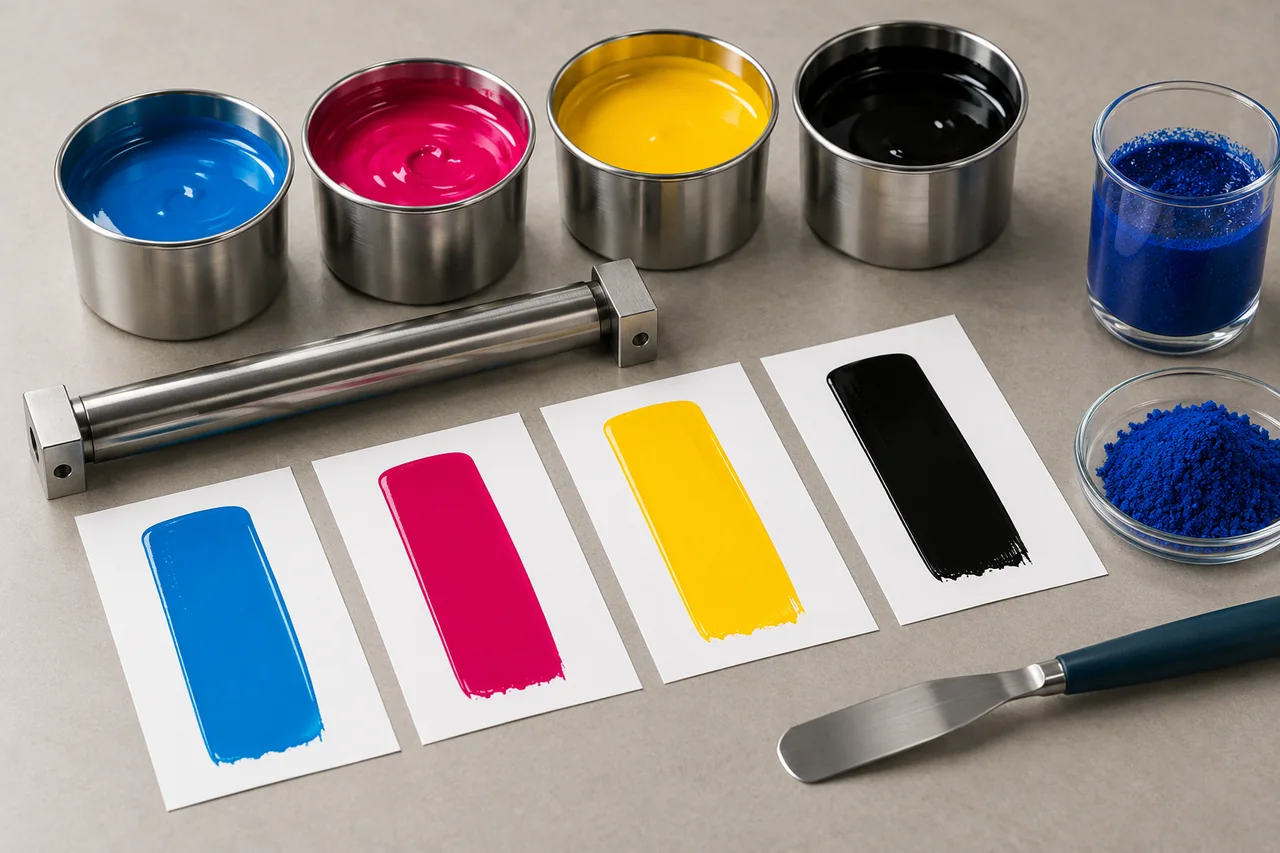
Explore the documented candidates and the properties relevant to their role.
18 documented candidates across 7 roles
View all matching gradesSelect a role above to show relevant grades and selection properties.
Separate binder selection, pigment-paste formulation and adhesion promotion, then compare the documented application of each grade with your formulation.
Drovin B18 is a low-viscosity PVB printing-ink binder. Ketonic 9100 is a hard ketone-aldehyde printing-ink resin, while Dromal 2351 is a rosin-modified maleic resin listed for printing inks and coatings. These general applications do not specify a printing process.
Low-viscosity grade of polyvinyl butyral resin.
Hard ketone-aldehyde resin with broad binder compatibility and conventional-solvent solubility.
Rosin-modified maleic resin with a penta-ester-based composition.
Drotone 9123 is listed for pigment pastes. Drotone 9124 and Drotone 9125 are listed for universal pigment pastes. Use the pigment package and formulation vehicle to frame your evaluation.
Hard aldehyde resin made from urea and aliphatic aldehydes, with resistance to yellowing.
Solid condensation product of cyclohexanone and formaldehyde, described as bright and resistant to yellowing.
Hard ketone-aldehyde resin with a high hydroxyl value, broad binder compatibility and solvent solubility.
Drobond 550 and Drobond 551 are listed for ink adhesion promotion. Drobond 550 is a butyl titanium phosphate specifically described for flexible packaging inks; Drobond 551 is described as an acetyl-acetonate-based titanium adhesion promoter.
Butyl titanium phosphate for flexible packaging inks.
Acetyl-acetonate-based titanium adhesion promoter supplied as a solution in isopropyl alcohol.
Choose the formulation task, describe the existing system and define what a successful trial must show.
Binder selection, pigment-paste formulation and adhesion promotion are separate starting points.
Match the documented ingredient role to the task.
Record the binder, solvent vehicle and pigment package already in use.
Give enough formulation context to discuss compatibility.
Specify the substrate, printing process and acceptance tests for your formulation.
Turn the intended use into measurable evaluation criteria.
Evaluate materials in the complete formulation and intended process.
How to define the printed construction →
Answer only what you know. Review and edit the summary before continuing to the enquiry.
The summary updates as you answer.
Write my own enquiryThese answers prepare a discussion brief; they do not select or approve a grade. Your draft stays in this browser tab.