Alguns conteúdos, documentos e vídeos estão disponíveis apenas em inglês.
Tintas de impressão

Tintas de laminação

Polyurethane and polyamide grades with documented lamination-ink applications.

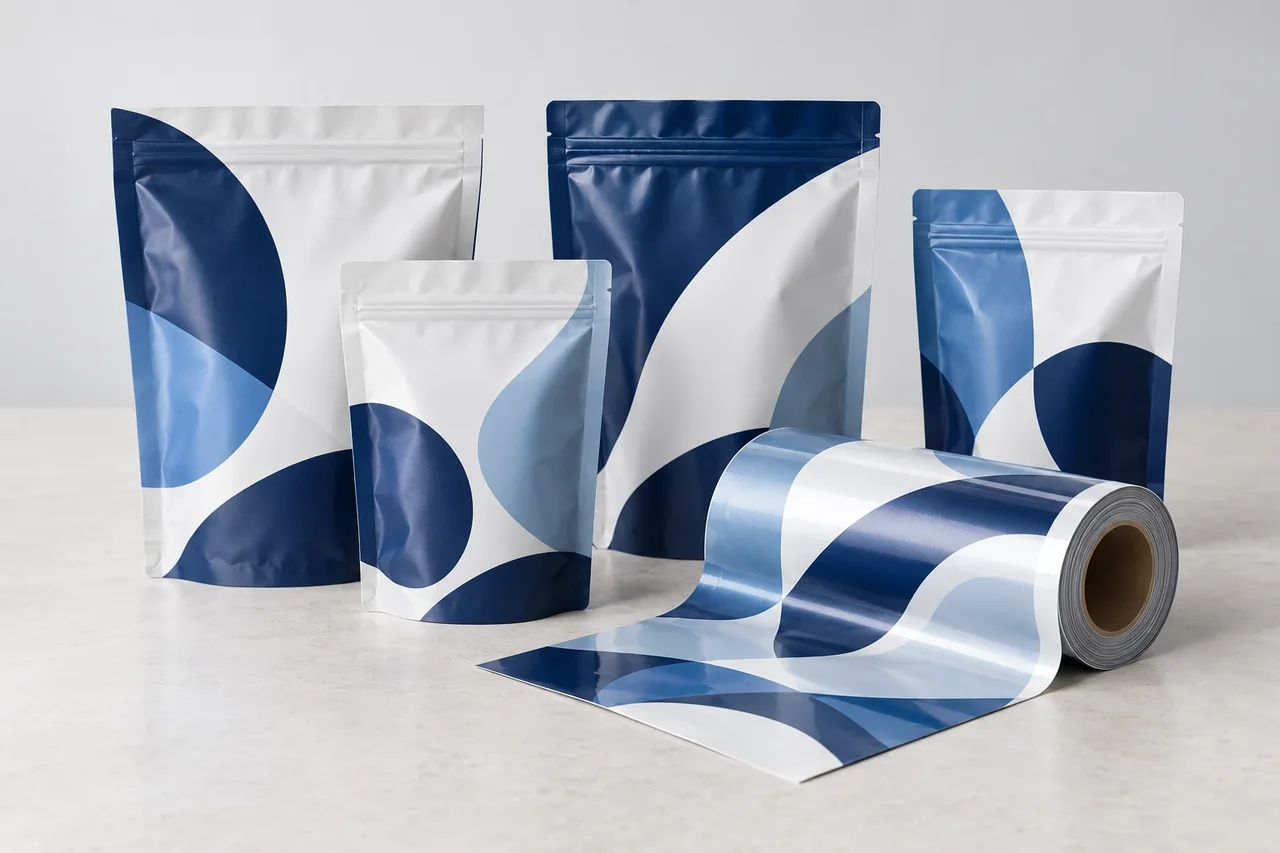
Laminated pouches and printed flexible film
APPLICATION TO MATERIAL

Choose the component’s role.

Explore the documented candidates and the properties relevant to their role.

7 documented candidates across 2 roles

View all matching grades

Choose a component role to view its grades and technical properties.

APPLICATION FILM · 1:33

Tintas de impressão para laminação

Explore gravure and flexographic printing, the ink binder and the separate role of the laminating adhesive.

All application films
Ler a transcrição

On this flexible pack, you see the design through the outer film. The ink is printed on its inner face. The ink starts with a clear polyurethane resin. It forms an elastic film and is usually combined with nitrocellulose and pigment. Film options include biaxially oriented polypropylene, polyethylene and polyester. The film surface needs the right treatment for printing. In gravure, ink fills engraved cells on a cylinder. A doctor blade wipes the surface. The ink left in the cells transfers to the film. In flexography, a metering roller delivers ink to the raised areas of a printing plate. The plate then prints the film. The resin offers good alcohol tolerance for flexographic inks and good solvent release during drying. A separate laminating adhesive bonds the printed outer film to a second film, enclosing the ink between the layers. The binder helps the print flex with the pack and supports high lamination bond strength. Suitably formulated laminates can also withstand deep-freeze conditions. Check performance in the finished pack. Contact D. R. Coats to discuss your film, printing process and ink formulation.

Explore selection examples
PRINTING INKS / PROCESS ROUTES

Evaluate the complete laminate structure.

Start with the laminate structure and lamination process, then compare the resin role, solvent package and supplied solids.

General lamination inks2 grades to review

What shapes the choice

Share the film and laminate structure when reviewing binder and drying requirements.

Grades to review

  • Dropack 5245

    Thermoplastic polyurethane resin with semi-film-forming character.

  • Dropack 5256

    Non-reactive, semi-aliphatic polyurethane of high molecular weight, free of NCO and organotin compounds.

Extrusion-lamination and retort development1 grade to review

What shapes the choice

Request evaluation guidance for the complete laminate and its processing conditions. This is not a finished-packaging approval.

Grades to review

  • Dropack 5260

    Non-reactive aliphatic polyurethane film-forming resin of high molecular weight.

Understand the application
UNDERSTAND THE APPLICATION

Explore what sits behind the print.

Select a layer in the diagram or use the labelled controls to explore its role.

OutsideILLUSTRATIVE SYSTEM
Outer film01Printed ink02Adhesive03Sealant film04
Inside
LAYER 1 / 4

Outer film

Carries the reverse-printed image on its inner face in this example. The film and its surface condition influence ink selection.

For your technical discussion

Which film and surface treatment are used?

Discuss this layerExplore material selection

Simplified reverse-printed laminate, shown separated for clarity and not to scale. Actual packaging may use different films and additional layers; end-use suitability requires evaluation.

How to define the printed construction →

Help me define my requirementOptional — prepare a brief for your technical discussion.
YOUR NEXT CONVERSATION

Prepare your technical brief.

Answer only what you know. Review and edit the summary before continuing to the enquiry.

All answers are optional. Leave anything you do not know blank.

The summary updates as you answer.

Write my own enquiry

These answers prepare a discussion brief; they do not select or approve a grade. Your draft stays in this browser tab.