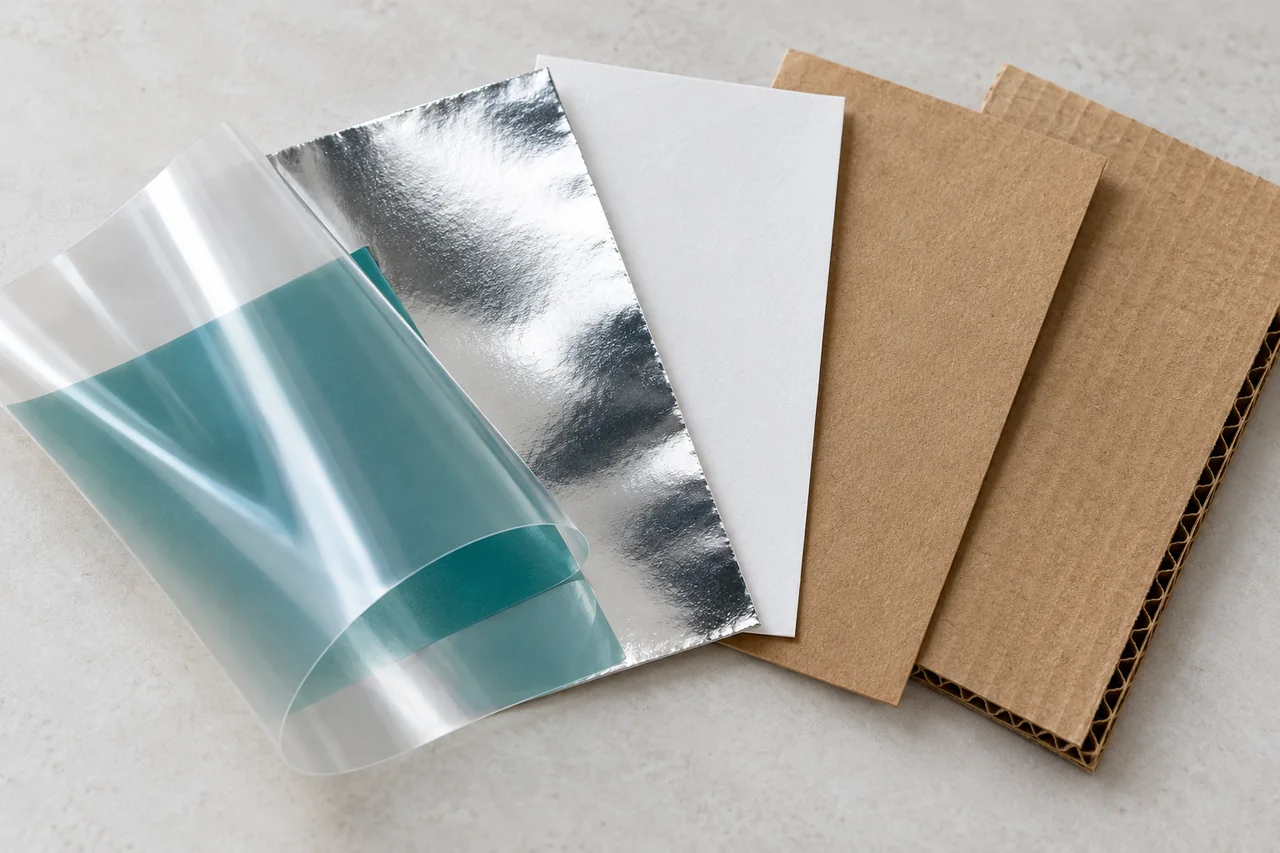
Identify the substrate
Name the packaging format, substrate material and whether the printing surface is treated or untreated.
Match specific substrate evidence without extending it to other materials.
Find grades documented for packaging inks, milk-pouch inks and untreated-substrate applications.

Explore the documented candidates and the properties relevant to their role.
8 documented candidates across 5 roles
View all matching gradesSelect a role above to show relevant grades and selection properties.
Use the packaging format, substrate and service conditions to narrow the documented applications. Packaging use alone does not establish food-contact compliance; include any applicable requirements in your brief.
Dromide 939 and Dromide 966 are specifically developed for untreated HDPE and PP woven sack bags. Dromide 968 is listed more generally for inks on untreated substrates; its application does not identify a particular substrate.
Co-solvent-soluble, non-reactive polyamide resin developed for untreated HDPE and polypropylene woven sack bags.
Non-reactive polyamide resin soluble in co-solvents and developed for untreated HDPE and polypropylene woven sack bags.
Modified, alcohol-soluble, non-reactive polyamide resin.
Drobond 550 is an adhesion promoter for flexible packaging inks. Dropack 5260 is listed for extrusion lamination and retort packaging inks. Dropol 2232 is listed for sheet/web offset and packaging inks. Each provides a separate starting point for the stated application.
Butyl titanium phosphate for flexible packaging inks.
Non-reactive aliphatic polyurethane film-forming resin of high molecular weight.
Self-gelling, low-tack rosin-modified phenolic resin with high melting point and high molecular weight.
Connect the documented application to your actual substrate, pack structure and evaluation conditions.
Name the packaging format, substrate material and whether the printing surface is treated or untreated.
Match specific substrate evidence without extending it to other materials.
State the printing process, ink location and any lamination or retort steps in the intended application.
Keep the required ink role and pack construction explicit.
Record temperature exposure, adhesion checks and any applicable food-contact requirements.
Define the trial conditions and acceptance criteria.
Evaluate materials in the complete formulation and intended process.
How to define the printed construction →
Answer only what you know. Review and edit the summary before continuing to the enquiry.
The summary updates as you answer.
Write my own enquiryThese answers prepare a discussion brief; they do not select or approve a grade. Your draft stays in this browser tab.