Certains contenus, documents et vidéos sont disponibles uniquement en anglais.
Responsible chemistry

Material choices need evidence.

Explore selected bio-based, waterborne and solvent-free routes in the DRC portfolio. Evaluate the individual grade alongside the processing, performance and documentation requirements of your application.

FROM MATERIAL TO APPLICATION

Material options

Raw-material origin is one part of a formulation decision. Connect it to the supplied grade and the requirements of the finished system.

  1. 01

    Material route

    Identify the feedstock and supplied form.

  2. 02

    Grade properties

    Read the technical data on its stated basis.

  3. 03

    Application evidence

    Evaluate the complete formulation for its intended use.

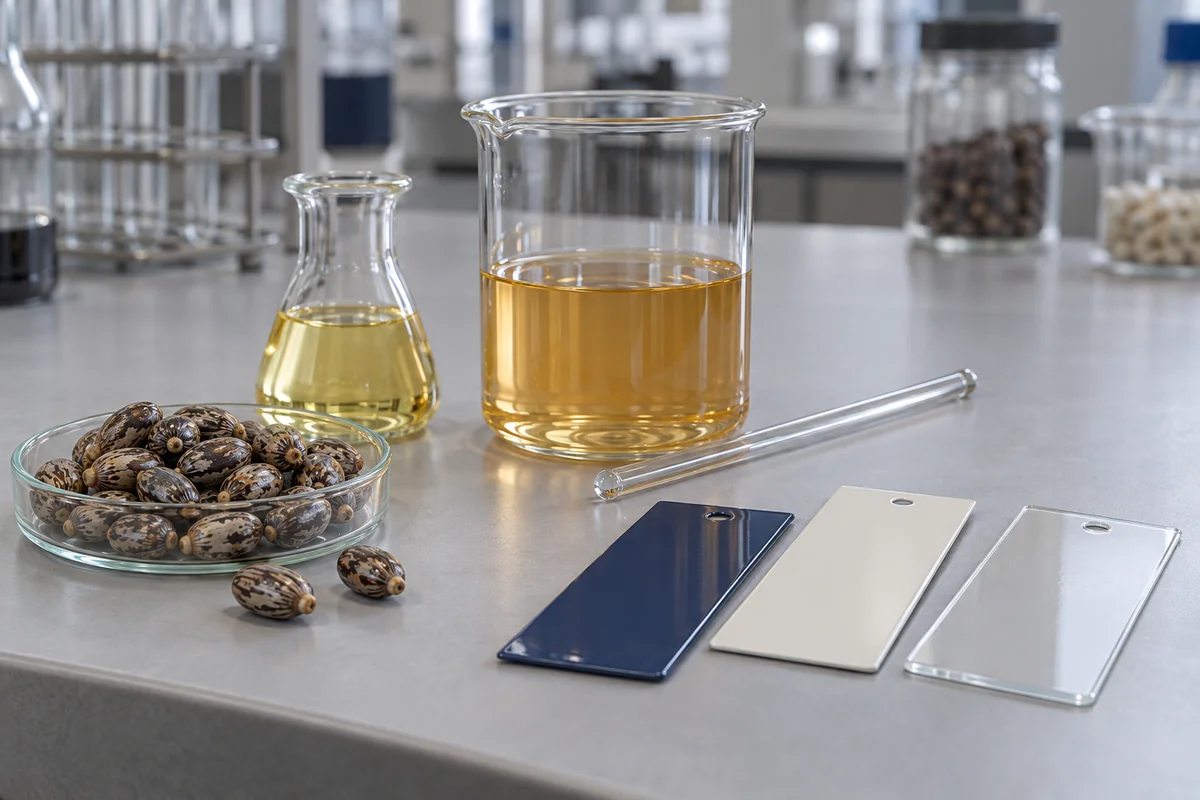
Material samples arranged from plant-derived raw materials to resin and finished coating panels

Start with a specific material.

Produits biosourcés

These named examples describe raw-material routes. Review the grade and complete formulation together.

MATERIAL ROUTE / SUPPLIED FORM

Castor-oil-based polyols

Drothane 1145 is a solvent-free polyol based on castor oil. Review the individual grade’s hydroxyl value, viscosity and formulation role before building a shortlist.

NAMED GRADE

Drothane 1145

Hydroxyl value
220 - 250mg KOH/g; EN ISO 4629
Viscosity @ 25°C (Brookfield)
2700 - 3200cP; ASTM D 2196
Moisture including volatiles
< 0.2%
Equivalent weight
240 approxg/eq

Define the requirement you need to substantiate.

A raw-material description does not establish the environmental performance or regulatory suitability of a finished formulation.

  • The grade and finished application under evaluation
  • The requested bio-based or solvent-content information
  • The destination market and applicable documentation
  • The test method or assessment basis required by your customer
Discuss material documentation

Évaluation de la durabilité

Consulter l’évaluation EcoVadis Gold de juin 2025